
Aortic aneurysm & dissection
“I need an expert aortic surgeon for my aneurysm or dissection.”
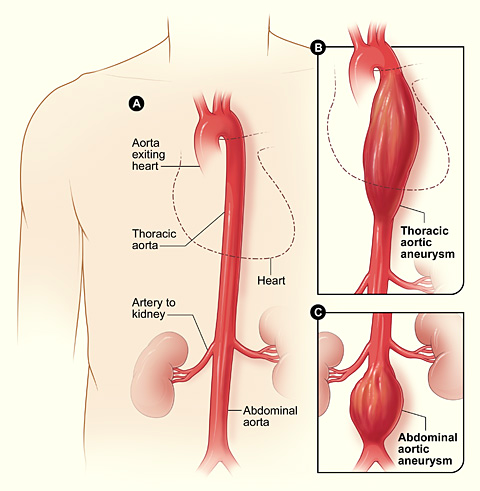
The aorta is the body’s largest artery. An aneurysm is a bulge in its wall, and a dissection is a tear in its inner layer. Either one means you need an experienced aortic surgeon. We use both open surgery and minimally invasive stent grafts to prevent rupture.
What we treat
- Abdominal aortic aneurysm (AAA)
- Thoracic and thoracoabdominal aneurysm
- Aortic dissection
How we help
- Ultrasound evaluation of your aorta in our vascular lab
- Aneurysm screening and surveillance
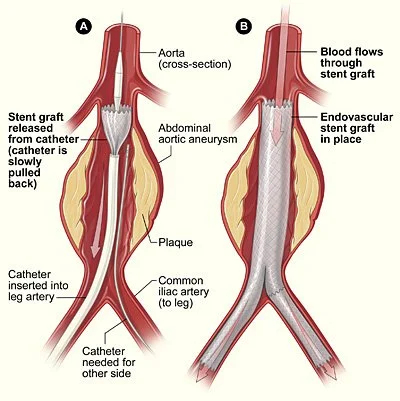
- Minimally invasive repair of aortic aneurysms or dissections with stents (EVAR and TEVAR)
- Open aortic surgery
Common questions
What are the symptoms of an abdominal aortic aneurysm?
Most abdominal aortic aneurysms cause no symptoms and are found during a scan for something else. Some people notice belly or back pain, or a pulsing feeling in the belly. Call 911 for sudden, severe belly or back pain, which can mean a rupture.
Who should be screened for an aortic aneurysm?
US guidelines recommend a one-time ultrasound for men ages 65 to 75 who have ever smoked. Others may also benefit, especially people with a close relative who had an aneurysm. Medicare covers one screening for people who qualify. The test is quick, painless, and doesn’t use radiation.
What size aortic aneurysm needs surgery?
Repair of an abdominal aneurysm is often considered at about 5.5 cm in men and 5.0 cm in women. It may be sooner if it grows quickly or causes symptoms. Smaller aneurysms are usually watched with regular imaging.
What is the difference between EVAR and open aneurysm surgery?
EVAR places a stent graft inside the aorta through small punctures in the groin, usually with a shorter hospital stay and quicker recovery. Open surgery replaces the weak section through a larger incision. It takes longer to recover from, but may need fewer repeat procedures. Your anatomy and health guide the choice.
What is an aortic dissection?
An aortic dissection is a tear in the inner layer of the aorta that lets blood split the layers of the wall. It often causes sudden, severe pain in the chest, back, or belly. Call 911 right away if you experience these symptoms. Some dissections need emergency repair, and others can be managed with blood pressure medications and close monitoring.
What is recovery like after aortic aneurysm repair?
After EVAR, many patients go home within a day and resume normal activity shortly after that. After open surgery, the hospital stay is often about 4-5 days, and full recovery can take a few months. Everyone needs long-term imaging follow-up.
Medical content reviewed by Xuan-Binh (Ben) Pham, M.D., vascular surgeon. Last reviewed November 2026.
Talk with a vascular surgeon
Call our office, or send a request and we’ll call you back to schedule.
Other conditions we treat
- Peripheral artery disease“I want to walk without pain.”
- Varicose veins & venous disease“I want to get rid of my painful varicose veins.”
- Carotid disease & stroke prevention“I want to lower my risk of having a stroke.”
- Dialysis access“I need help with my journey through dialysis.”
- Wound care & limb salvage“I have a wound that won’t heal.”
- Thoracic outlet syndrome“I have numbness and pain and tingling in my shoulders and arms.”
- Kidney, intestinal & other arteriesLess common problems, including those seen in athletes