
Carotid artery disease & stroke prevention
“I want to lower my risk of having a stroke.”
Carotid artery disease is a buildup of plaque in the carotid arteries of the neck, and it is a leading cause of stroke. Finding it early and removing or stenting it at the right time restores normal blood flow to the brain and can prevent a stroke.
What we treat
- Carotid artery narrowing or blockage
- Mini-strokes (TIA)
- Carotid body tumors
- Fibromuscular dysplasia
- Carotid webs
- Carotid dissections
- Vertebral artery narrowing or blockage
- Subclavian steal syndrome
How we help
- Ultrasound to evaluate the degree of blockage in our vascular lab
- Carotid endarterectomy (open surgery to remove the plaque)
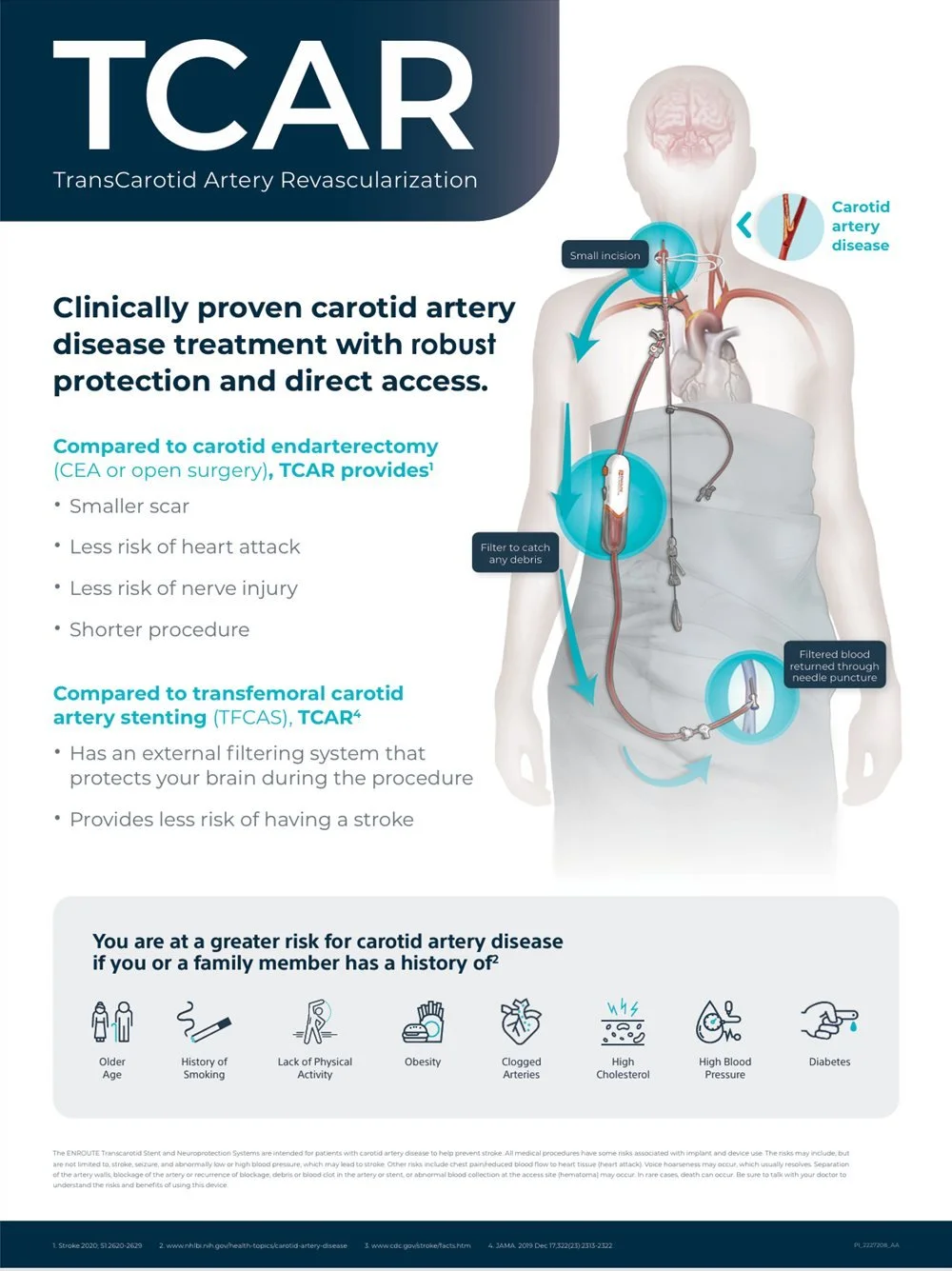
- TCAR (carotid stenting from a micro incision over the collarbone)
- Carotid angioplasty and stenting
- Subclavian artery stenting or bypass
TCAR · TransCarotid Artery Revascularization
A minimally invasive carotid procedure, with your brain protected the whole time.
Through a micro incision over the collarbone, your surgeon places a stent in the carotid artery. During the procedure, blood flow is temporarily reversed and filtered, so loose plaque is caught before it can reach the brain. Every procedure has risks, so we’ll talk through whether TCAR, open surgery, or another option is right for you.
Vascular surgeons are trained in medical management, carotid stenting, TCAR, and carotid endarterectomy, so we can help you decide which is right for you.
Common questions
What are the symptoms of carotid artery disease?
Many people have no symptoms until they have a mini-stroke or stroke. Warning signs include sudden face drooping, weakness or numbness on one side, trouble speaking, or loss of vision in one eye. Call 911 for any of these, even if they go away.
What is a mini-stroke?
A mini-stroke, or transient ischemic attack (TIA), is a brief loss of blood flow to part of the brain. Symptoms can pass within minutes, but it is a warning that a larger stroke may follow. Call 911 right away, even if you feel better.
How is carotid artery disease diagnosed?
A carotid ultrasound measures how narrowed the arteries in your neck are. The test is painless and doesn’t use radiation. Your surgeon may also order a CT or MR angiogram to plan treatment.
When does a carotid blockage need a procedure?
It depends on how narrow the artery is, whether you have had symptoms, and your overall health. A significant narrowing after a stroke or TIA usually calls for prompt evaluation. Many people without symptoms can be managed with medicine and regular ultrasounds.
What is recovery like after carotid surgery or TCAR?
Many patients stay in the hospital for one night and return to light activity within days. Your surgeon will explain any limits on driving, lifting, and work. You will also have follow-up ultrasounds to check the artery.
How can I lower my risk of stroke from carotid disease?
Don’t smoke, and keep your blood pressure, cholesterol, and diabetes under control. Take your prescribed medicines, such as aspirin or a statin, as directed. Keep your follow-up ultrasounds, because a narrowing can change over time.
Medical content reviewed by Xuan-Binh (Ben) Pham, M.D., vascular surgeon. Last reviewed November 2026.
Talk with a vascular surgeon
Call our office, or send a request and we’ll call you back to schedule.
Other conditions we treat
- Peripheral artery disease“I want to walk without pain.”
- Varicose veins & venous disease“I want to get rid of my painful varicose veins.”
- Aortic aneurysm & dissection“I need an expert aortic surgeon.”
- Dialysis access“I need help with my journey through dialysis.”
- Wound care & limb salvage“I have a wound that won’t heal.”
- Thoracic outlet syndrome“I have numbness and pain and tingling in my shoulders and arms.”
- Kidney, intestinal & other arteriesLess common problems, including those seen in athletes